
William Clarke's Crystal Sets
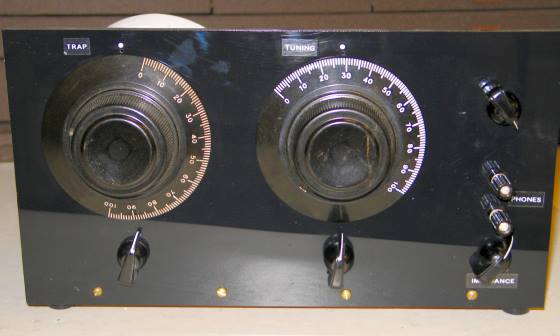


Hi Dave
I am sending this first radio "showcase", hoping that the files are not too large. I have included a table of some stations received (excel sheet) that shows this receiver has decent performance.
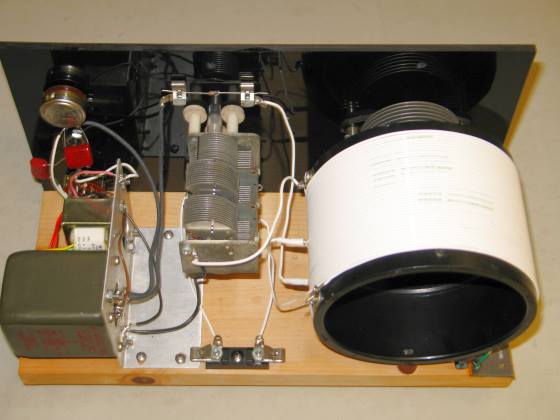
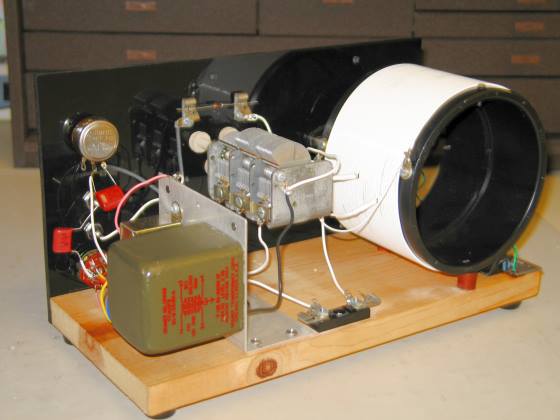
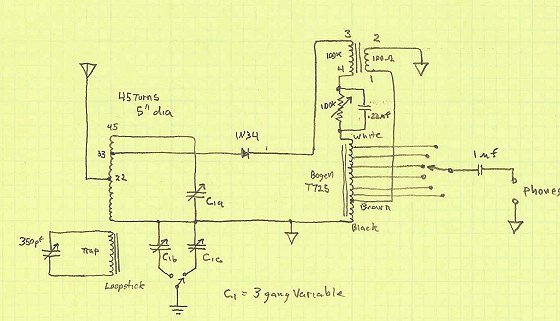
The coil is wound on an ABS coupler of 5" outer diameter. I used teflon coated wire. I placed a loopstick close by as a wavetrap. I tried a concentric position at first, but the tuning shifted when the trap was "on". The outside location works very well with minimum effect on the tuning.
I find the tuning is best when ground (earth) is coupled through the small oscillator section of the ganged cap. The audio transformer section is the Stanley/Bogen "Select to Match" Impedance Matching Circuit by Steve Bringhurst. I first became aware of this "sound powered phone thingy" while looking at your website last fall.
Thanks
William Clarke
Hi Dave
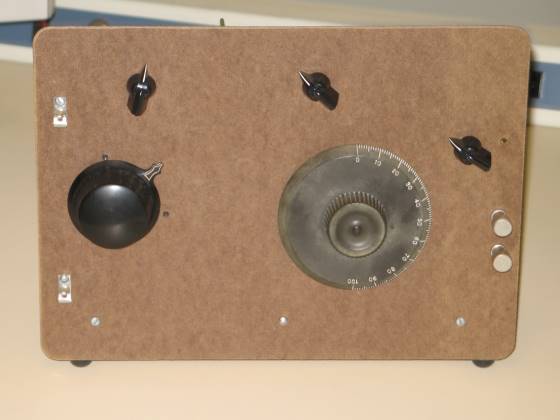
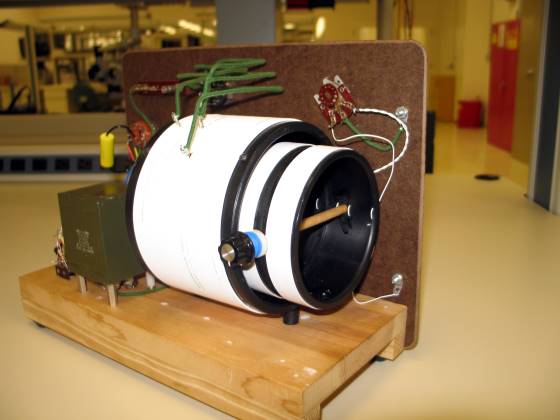
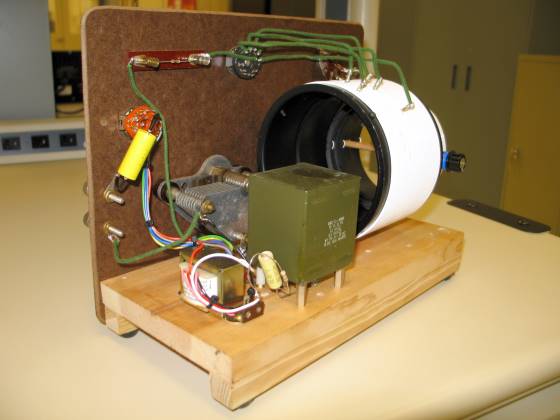
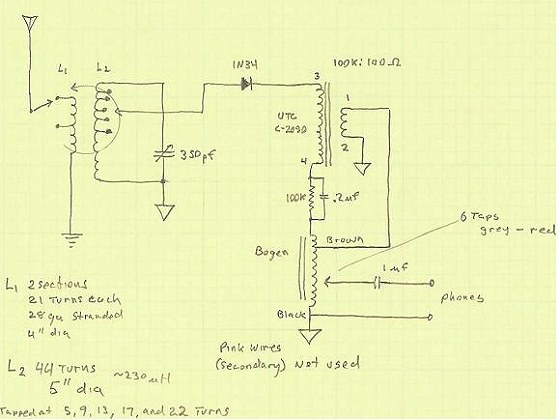
This radio is a loose coupled type. The same 5" tuning coil is fed by a
4" rotating primary.
Between the detector taps and the center tapped primary, I can get any
degree of selectivity
I need. The front panel is a masonite clipboard and the bearings for the
primary are a couple
of eyebolts with grommets in them. The shaft is a 1/4" dowel rod. The
audio transformer
setup is the same as the other radio.
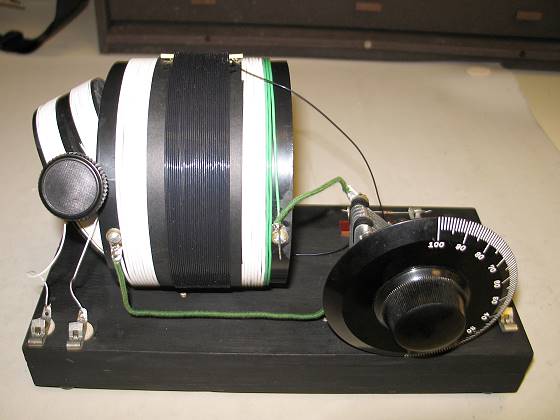
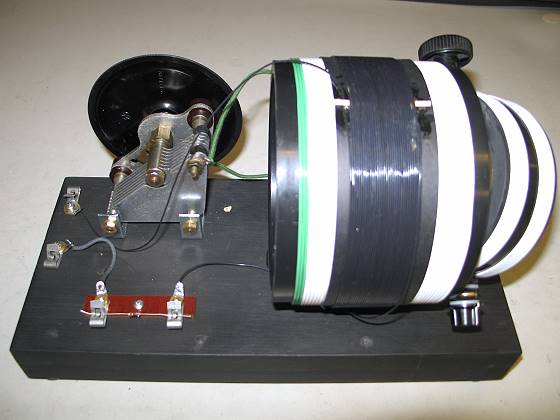
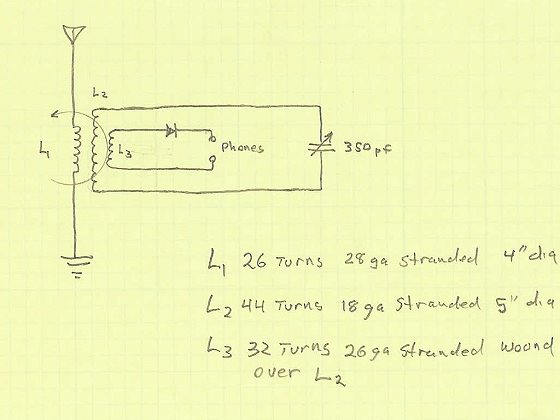
Here is a Telefunken type radio. The primary is moveable and the detector winding is close-coupled to the tuning circuit. I've also tried attaching the antenna and ground to different spots on all 3 windings (kind of like a "mystery set" configuration) - the conventional connections seem to give the best tuning range. I use an external transformer/SP phone with this one.
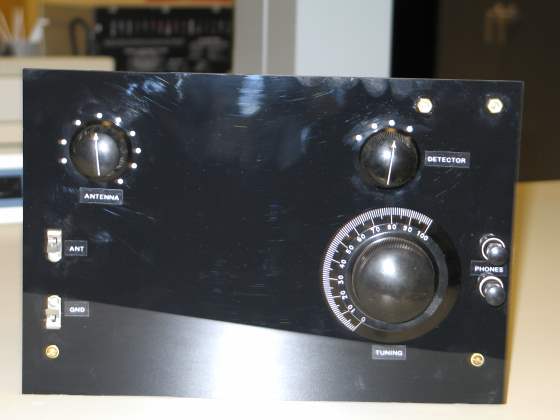
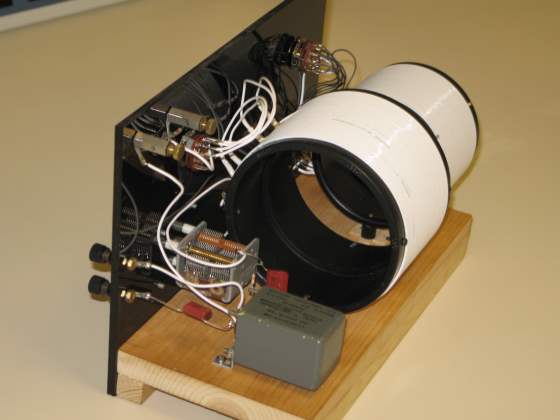
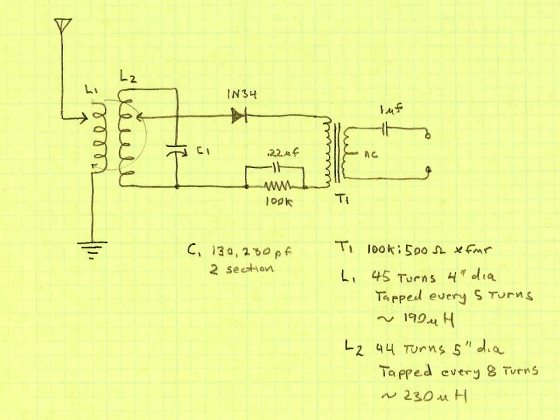
This is another loose coupled type. The primary is a large tapped coil which moves on a small wood track. The rest of the radio is similar to the others - detector taps and transformer for sound-powered phones. I get a lot of stations on this one as well. It has a velvet vernier for the tuning and a plastic front panel which shows fingerprints very well.
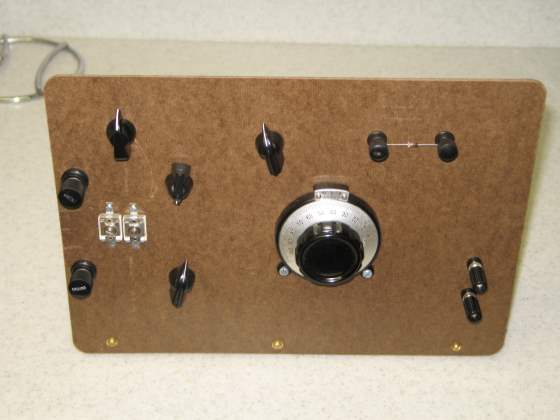
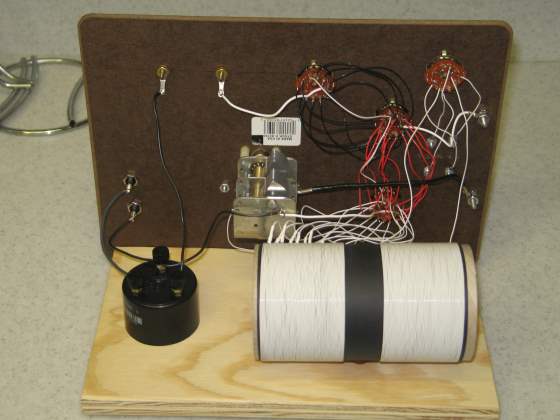
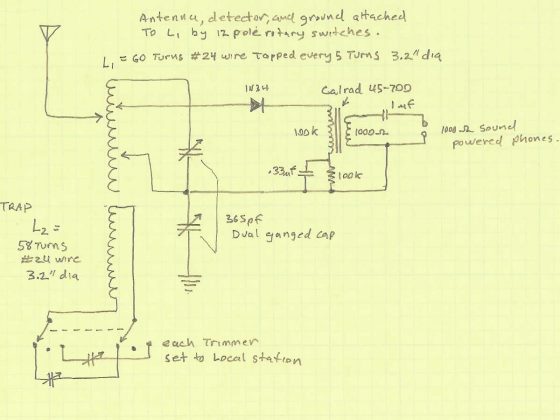
I just wired and tested this one. With the exception of the 3 switches going to the 12 taps, there's hardly anything to it. It's just a logical extension of the MRL #2 set.
I just gave the antenna and detector the same access to taps as the ground in the original plan. I used a calrad 45-700 in the "transformer thingy" - it works fabulously with the RCA phones. I will still need to do some testing, but the BCB performance is very sharp.
The wavetrap setup uses the 2 trimmers on the panel. I just set each one to a local station and use a 3 position switch. For the way a trap should be used, this makes more sense - just switch to the station you need to silence.
